How Cloud Computing Will Change in 2026: What SMBs Need to Know - Luna Tech HD
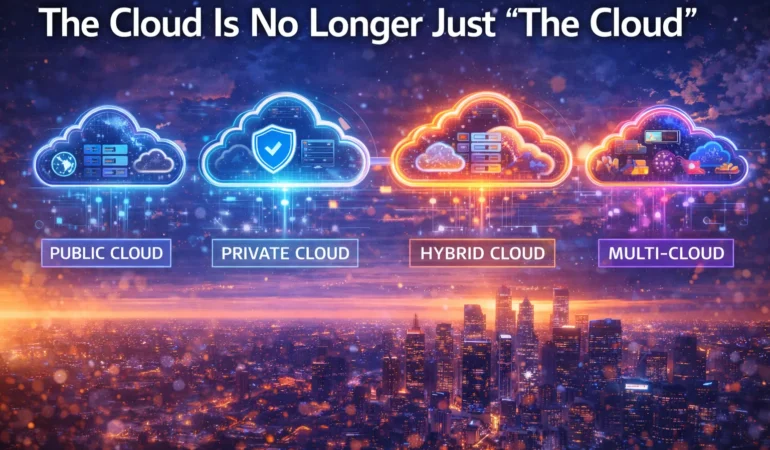
The Cloud Is No Longer Just “The Cloud”
When cloud computing first entered mainstream IT conversations over a decade ago, the pitch was simple: move your servers to AWS, Azure, or Google Cloud, and you’ll save money while scaling faster. That pitch still holds true in 2026, but the cloud has evolved into something far more complex and powerful than simple virtual machine hosting.
Today, cloud computing means AI-native services, serverless architectures, edge computing nodes deployed in hundreds of locations, specialized GPU infrastructure, and deeply integrated security and compliance tools. For small and medium businesses (SMBs), navigating this landscape can be overwhelming. This article breaks down the most important cloud trends for 2026 and how SMBs can take advantage of them.
1. AI-Native Cloud Services Become Standard
Every major cloud provider now offers integrated AI services that don’t require you to be a machine learning expert. AWS Bedrock, Azure OpenAI Service, and Google Vertex AI let businesses integrate large language models, image generation, voice processing, and translation directly into their applications with just a few API calls.
For SMBs, this means capabilities that used to require dedicated AI teams and custom infrastructure are now accessible at pay-per-use pricing. Customer service chatbots, document summarization, sentiment analysis, and automated content moderation are all within reach for businesses of any size.
2. The Rise of Edge Computing
Traditional cloud computing means your data travels to a distant data center for processing. Edge computing flips this model: processing happens close to where the data is generated. This reduces latency, saves bandwidth, and enables new use cases that require real-time response.
In 2026, AWS Wavelength, Azure Edge Zones, and Google Distributed Cloud Edge are all widely deployed. Cloudflare Workers run code in over 300 cities worldwide. For SMBs, this means building fast, responsive applications is easier than ever. Content delivery, real-time analytics, and IoT applications all benefit dramatically from edge computing.
3. Multi-Cloud Becomes the Default
The early cloud era was dominated by “pick one provider and go all-in.” In 2026, multi-cloud is the default strategy for most serious businesses. Companies use AWS for compute, Google Cloud for AI and analytics, Azure for Microsoft integrations, and Cloudflare for edge and security.
This approach protects against vendor lock-in, takes advantage of each provider’s strengths, and provides resilience against outages. Tools like Terraform, Pulumi, and Crossplane make managing multi-cloud infrastructure as code practical and repeatable.
4. Green Cloud and Sustainability Reporting
Sustainability has moved from nice-to-have to mandatory reporting requirement for many industries. Cloud providers now offer detailed carbon footprint reports, and businesses are starting to factor environmental impact into their architectural decisions.
Google Cloud publishes carbon emissions data for every region, and AWS’s Customer Carbon Footprint Tool helps businesses track and reduce their environmental impact. In 2026, this isn’t just about doing the right thing—it’s about compliance and customer expectations, especially in the EU where ESG reporting is now mandatory for medium-sized companies.
5. Serverless Goes Mainstream
Serverless computing (functions, containers-on-demand, managed databases) has matured significantly. AWS Lambda, Google Cloud Functions, and Azure Functions now handle production workloads for companies at every scale. Cold start times have dropped, cost models are predictable, and integration with other cloud services is seamless.
For SMBs, serverless means you don’t manage servers, operating systems, or scaling policies. You write code, deploy it, and pay only for what you use. This is transformative for businesses that can’t afford dedicated DevOps teams.
6. Cloud Security Evolves Beyond Compliance Checklists
Security in 2026 is proactive, automated, and continuous. Cloud Security Posture Management (CSPM) tools scan your infrastructure continuously for misconfigurations. Cloud Workload Protection Platforms (CWPP) monitor running applications for threats. Identity and access management is integrated across providers.
The emergence of AI-powered threat detection means suspicious activity is identified in seconds rather than hours or days. Platforms like Wiz, Orca Security, and CrowdStrike Falcon Cloud Security provide visibility that was simply impossible a few years ago.
7. Database Innovation Accelerates
Managed database services have become specialized and powerful. Vector databases for AI applications (Pinecone, Weaviate, Qdrant), time-series databases for IoT (InfluxDB, Timescale), graph databases for relationship analysis (Neo4j Aura), and distributed SQL (CockroachDB, PlanetScale) all offer managed cloud versions.
For SMBs, this means you can pick the right database for each use case without managing complex infrastructure. The days of shoehorning every workload into MySQL or PostgreSQL are over.
What SMBs Should Do Right Now
Here’s a practical action plan for small and medium businesses looking to take advantage of these trends:
Step 1: Audit Your Current Cloud Usage
Most SMBs are overspending on cloud services by 20-40%. Use tools like AWS Cost Explorer, Azure Cost Management, or third-party solutions like CloudZero or Vantage to identify waste. Rightsizing instances, eliminating unused resources, and using reserved capacity can save thousands of euros per year.
Step 2: Adopt Infrastructure as Code
If you’re still clicking buttons in cloud consoles, you’re behind. Infrastructure as Code (IaC) using Terraform or Pulumi ensures your environments are reproducible, version-controlled, and documented. This becomes critical as your cloud footprint grows.
Step 3: Implement Basic AI Automation
Start with low-risk AI integrations: automated email classification, document processing, customer service chatbots for FAQs. These deliver immediate value without requiring deep ML expertise.
Step 4: Review Your Backup and Disaster Recovery
Cloud doesn’t mean immune to data loss. Ransomware attacks specifically target cloud backups. Implement immutable backup storage, test your recovery procedures regularly, and ensure you have off-cloud or multi-region backup strategies.
Step 5: Invest in Cloud Security Training
The biggest cloud security risk isn’t technology—it’s human error. Misconfigured S3 buckets, overly permissive IAM roles, and exposed secrets are the source of most cloud breaches. Invest in training your team.
The Cloud Skills Gap
One of the biggest challenges SMBs face in 2026 is finding qualified cloud engineers and DevOps professionals. Average salaries for cloud architects have increased by over 30% in the past two years, and turnover is high.
Smaller businesses often can’t compete on salary with large tech companies. The solution is to partner with specialized IT consultancies that provide cloud expertise on demand. Rather than hiring a full-time cloud architect, work with consultants who can design your architecture, implement best practices, and hand off day-to-day management to your existing team.
We see this model working well across industries. From retail chains using cloud for inventory management to streaming platforms like LunaTVROHD that serve thousands of concurrent users across multiple countries, specialized cloud expertise delivered through consulting partnerships has become the norm for growing SMBs.
Case Study: Cloud Migration Done Right
Consider a mid-sized e-commerce company that migrated from a self-hosted WooCommerce setup to a fully cloud-native architecture in 2025. The results:
- Performance: Page load times dropped from 3.2 seconds to 800ms
- Reliability: Uptime improved from 99.5% to 99.99%
- Cost: Total infrastructure costs decreased by 22% after optimization
- Scalability: Black Friday traffic handled without any performance issues or manual intervention
The migration took four months and cost less than a year of self-hosted server management. The key was working with experienced cloud architects who understood both the technical requirements and business constraints.
Looking Ahead: What’s Next for Cloud in 2027 and Beyond?
Several trends will shape cloud computing in the next few years:
- Quantum-safe cryptography will become mandatory as quantum computing advances threaten current encryption standards
- Confidential computing will protect data even while it’s being processed, not just at rest and in transit
- Fully managed AI platforms will let businesses train and deploy custom models without writing code
- Edge-native applications will be designed to run primarily at the edge, with the cloud as backup
- Cross-cloud networking will make multi-cloud feel like a single unified environment
Conclusion
Cloud computing in 2026 is more powerful, more accessible, and more complex than ever. For SMBs, the opportunities are enormous, but so are the risks of making wrong choices. Start with a clear strategy, focus on business outcomes rather than technology for its own sake, and don’t hesitate to bring in expertise when needed.
The businesses that will thrive in the cloud era aren’t necessarily the ones with the biggest budgets—they’re the ones that make smart, informed decisions and execute well. Whether you’re just starting your cloud journey or looking to optimize an existing deployment, the fundamentals remain the same: understand your requirements, choose the right tools, and invest in your people.
Need help with your cloud strategy? Check out our Cloud Computing services and IT Consultancy offerings, or get in touch to discuss your specific needs.